





Skin Science / Pigmentation
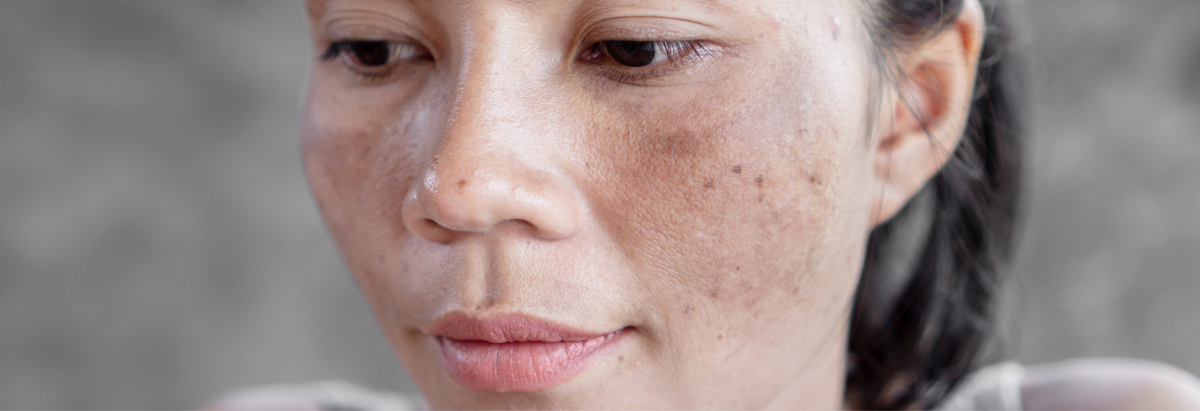
From old acne marks to sun spots and hormonal pigmentation, understanding the cause is the first step towards more even-looking skin.
Ever noticed a dark mark that lingers long after a spot has disappeared? Or patches of pigmentation that seem to become more noticeable with age?
Hyperpigmentation is one of the most common skin concerns, but not all dark spots develop for the same reason. And understanding why they're there makes a real difference to how you treat them.
What actually causes hyperpigmentation?
Our skin naturally produces melanin, the pigment responsible for its colour. Melanin also helps protect the skin against UV radiation.
Sometimes, however, melanin production becomes uneven or excessive in certain areas, leaving behind darker patches or spots.
There are several common triggers:
Sun exposure
Repeated UV exposure can cause sun spots and uneven pigmentation, sometimes becoming visible years later.
Inflammation
Acne, eczema and skin irritation can leave persistent dark marks, known as post-inflammatory hyperpigmentation (PIH).
Hormonal changes
Pregnancy, hormonal contraception and other hormonal influences can contribute to melasma, characterised by larger, often symmetrical patches.
Skin damage
Scratching, picking spots, friction and minor injuries can also trigger pigmentation.
Melanin-rich skin
Hyperpigmentation affects every skin tone, although post-inflammatory marks can be particularly persistent in melanin-rich skin.
A gentle, targeted routine and daily sun protection are particularly important for helping prevent existing marks from becoming more pronounced.

Can dark spots actually fade?
Yes, many forms of superficial pigmentation can improve with consistent skincare. The important thing is choosing the right approach.
For example, azelaic acid can be especially helpful for blemish-prone skin with lingering post-acne marks, while Vitamin C offers antioxidant benefits and helps improve radiance and uneven skin tone.
For established brown spots, targeted treatments such as SVR Clairial Night Peel can help improve their appearance.
Clairial Night Peel
An overnight treatment designed to help reduce the appearance of dark spots and improve uneven skin tone.
And if your skin is sensitive or easily irritated, maintaining a healthy skin barrier is just as important as correcting pigmentation.
One step makes the biggest difference
Whatever the cause, daily broad-spectrum sun protection is essential.
SPF50+ protection
UV exposure can intensify existing pigmentation and make dark marks harder to fade. A comfortable, high-protection SPF50+ is therefore one of the most valuable products in any pigmentation routine.
Explore Sun ProtectionRemember, dark spots rarely disappear overnight. Many take months to improve, and some need professional treatment.
The goal isn't to change your natural skin colour. It's to help your skin look clearer, healthier and more even.
New, changing or unusual pigmented marks should always be assessed by a healthcare professional.